Pharmacy Stock Losses: How Photo Based Stock Entry and Expiry Alerts Save Clinics Lakhs a Year
· Hextgenai
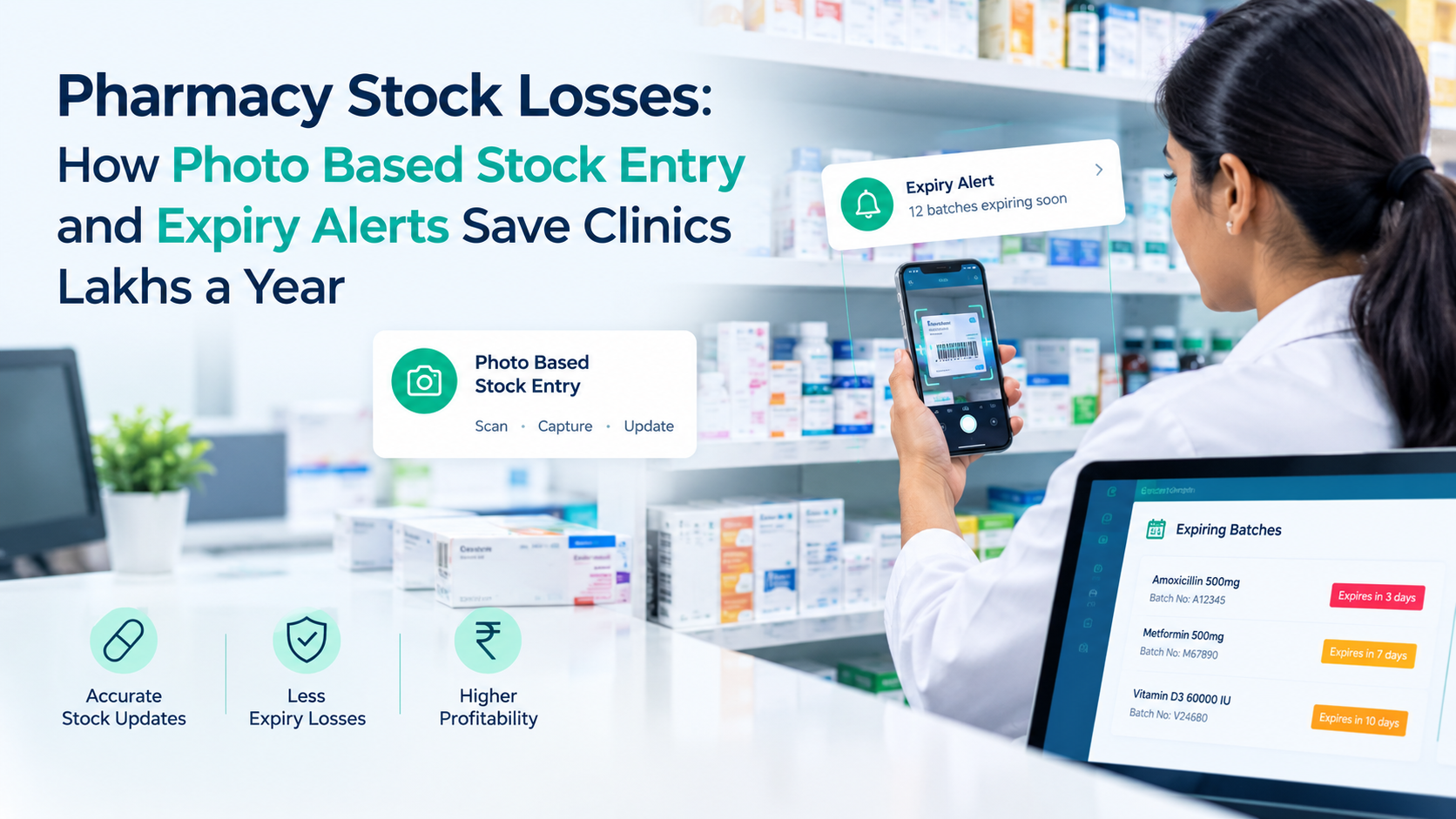
Pharmacy Stock Losses: How Photo Based Stock Entry and Expiry Alerts Save Clinics Lakhs a Year
Walk into the pharmacy section of almost any clinic in India, and you will find the same quiet problem hiding in plain sight, stock that is expired, misplaced, or simply forgotten about. It rarely shows up as a single big loss. It shows up as small write offs, month after month, that most clinics never actually add up.
When you do add them up, the number is usually bigger than expected. Industry estimates suggest clinics and small hospitals lose anywhere between 3 to 8 percent of their total pharmacy inventory value every year to expiry and mismanagement alone. For a medium sized clinic pharmacy, that can easily run into several lakhs annually, money that is essentially thrown away because nobody caught the problem in time.
The good news is this is not a staffing problem or a discipline problem. It is a visibility problem, and it is exactly the kind of thing a well built hospital management software should solve.
Why Pharmacy Stock Losses Happen in the First Place
A few patterns show up again and again in clinics we have worked with:
- Stock entered by hand, from memory, batch numbers and expiry dates typed in quickly during a busy shift, with no way to double check later
- No early warning on expiry, someone notices a batch has expired only when they are physically restocking the shelf
- Moving stock is not tracked in real time, so nobody knows what is actually about to run out until it already has
- Alerts, if they exist, live inside a dashboard nobody checks daily
None of these are big dramatic failures. They are small gaps that compound, which is exactly why they are so easy to miss and so expensive over a year.
Photo Based Stock Entry: A Small Change With a Big Payoff
One of the simplest fixes is also one of the most overlooked: attaching a photo to every stock entry.
Instead of relying purely on typed in batch numbers, staff can snap a quick photo of the medicine strip or box the moment stock comes in. This does two things:
- Removes ambiguity, if a batch number is misread or mistyped, the photo is still there as a reference
- Speeds up audits, anyone reviewing stock later can visually confirm what is on the shelf without hunting through paperwork
It sounds like a small detail, but for pharmacy management software, this single feature quietly eliminates a large share of the data entry errors that lead to stock discrepancies down the line.
Expiry and Moving Stock Alerts: Catching the Problem Before It Costs You
The second piece is timing. Most losses do not happen because a clinic does not have the expiry date on record, they happen because nobody looks at that date until it is too late.
A proper pharmacy inventory management system flips this around by actively pushing alerts, rather than waiting for someone to check:
- Expiry alerts flag stock nearing its expiry date well in advance, giving staff time to use it, return it, or discount it before it becomes a total write off
- Moving stock alerts track which items are running low based on actual usage patterns, so restocking happens before a shortage, not after a patient is turned away
The difference between the data existing and the data reaching the right person at the right time is, in practice, the entire difference between a clinic that loses money quietly and one that does not.
Why WhatsApp Alerts Change the Adoption Story
Here is the part that is easy to underestimate: even the best alert system fails if nobody checks it.
Sending these stock and expiry alerts directly to WhatsApp, rather than burying them inside a dashboard, means the person responsible actually sees them, the same way they see every other message on their phone. No extra login, no extra habit to build. Just a notification saying this batch expires in 5 days, or this item is running low.
For clinics already juggling patient care, billing, and staffing, this small shift from checking the system to the system telling you is often what makes the difference between an alert that gets acted on and one that gets ignored.
What This Actually Saves a Clinic Over a Year
Putting rough numbers to it, if a medium sized clinic pharmacy carries stock worth 15 to 20 lakh rupees annually and typically loses 5 percent to expiry and mismanagement, that is 75,000 to 1,00,000 rupees written off every year, often without anyone noticing until it is reflected in a much smaller number, profit.
Cutting even half of that loss through better visibility, photo based entry, timely expiry alerts, and WhatsApp notifications, pays for a good pharmacy management software system many times over.
The Bigger Picture: Pharmacy Is Part of the Whole Clinic
Pharmacy stock is rarely a standalone problem. It is usually one piece of a clinic running on disconnected tools, one system for appointments, another spreadsheet for stock, a separate register for billing. That is exactly why more clinics are moving toward a single hospital management software that ties pharmacy, billing, and patient records together, instead of managing pharmacy stock in isolation.
When stock data lives in the same system as patient and billing records, alerts are not just more timely, they are more accurate, because they are built on real usage data instead of manual best guesses.
Frequently Asked Questions
How much inventory do clinics typically lose to expired stock each year? Estimates generally range from 3 to 8 percent of total pharmacy inventory value annually, depending on how stock is tracked. For clinics without a dedicated system, losses tend toward the higher end of that range.
Does photo based stock entry take extra time for staff? It adds only a few seconds per entry, taking a photo during restocking, but significantly reduces the time spent later on manual audits and error correction.
What is the difference between expiry alerts and moving stock alerts? Expiry alerts flag stock approaching its expiry date so it can be used or removed in time. Moving stock alerts track usage patterns to flag items running low, helping prevent shortages before they happen.
Why send pharmacy alerts to WhatsApp instead of just the software dashboard? Because alerts only work if someone sees them in time. WhatsApp notifications reach staff the same way any other message does, without requiring a separate login or habit, which meaningfully improves how often alerts actually get acted on.
Curious how this works inside a full hospital management software? See how Hextgen ai's pharmacy module handles stock entry, expiry alerts, and WhatsApp notifications.
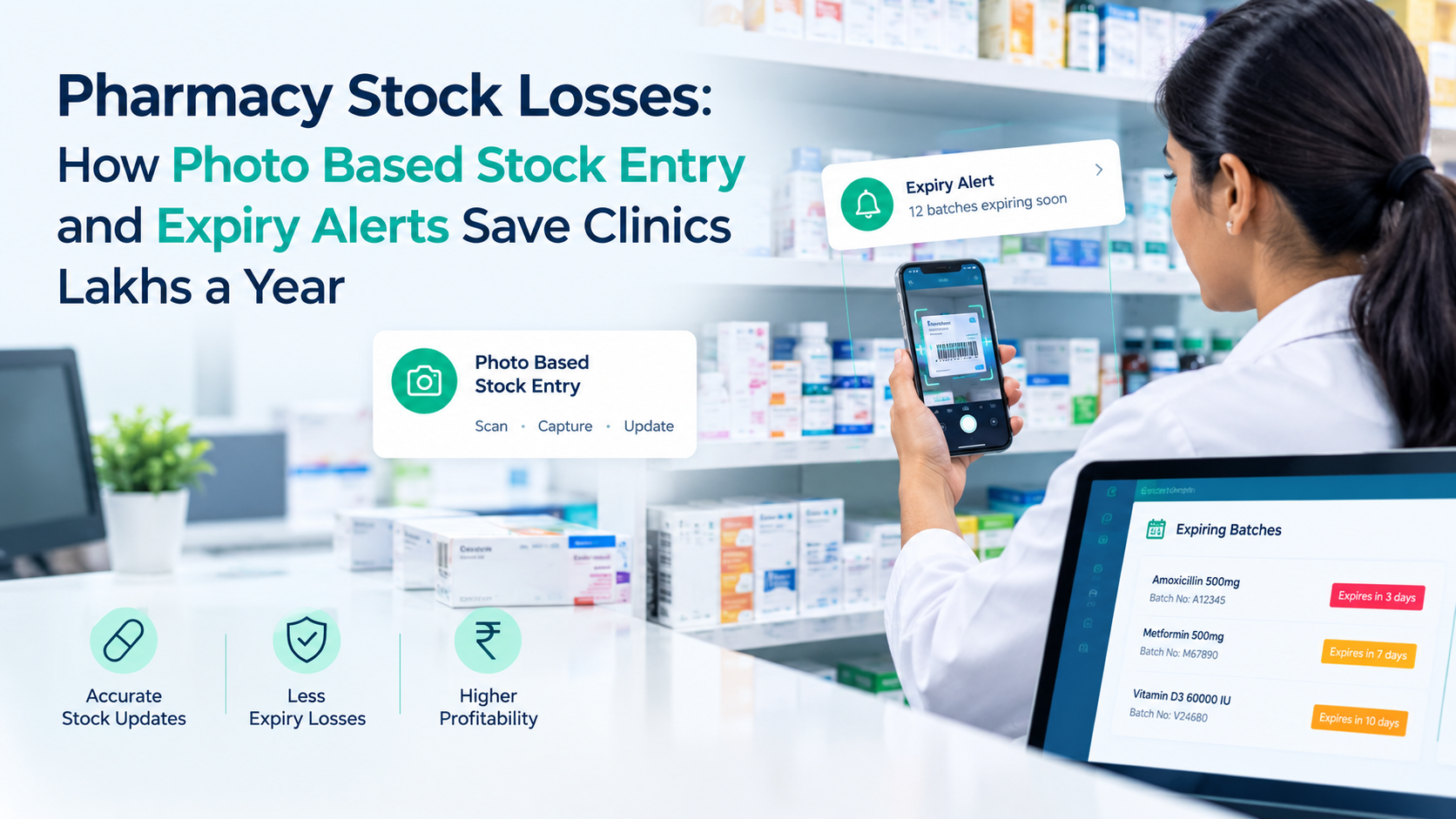
AI Pharmacy Management That Prevents Losses: How Smart Software Saves Lakhs Every Year
Why Use HextGen AI? Key Factors to Consider Before Choosing Clinic & Hospital Software
Patient Management System: Smart Appointment Scheduling for Hospitals